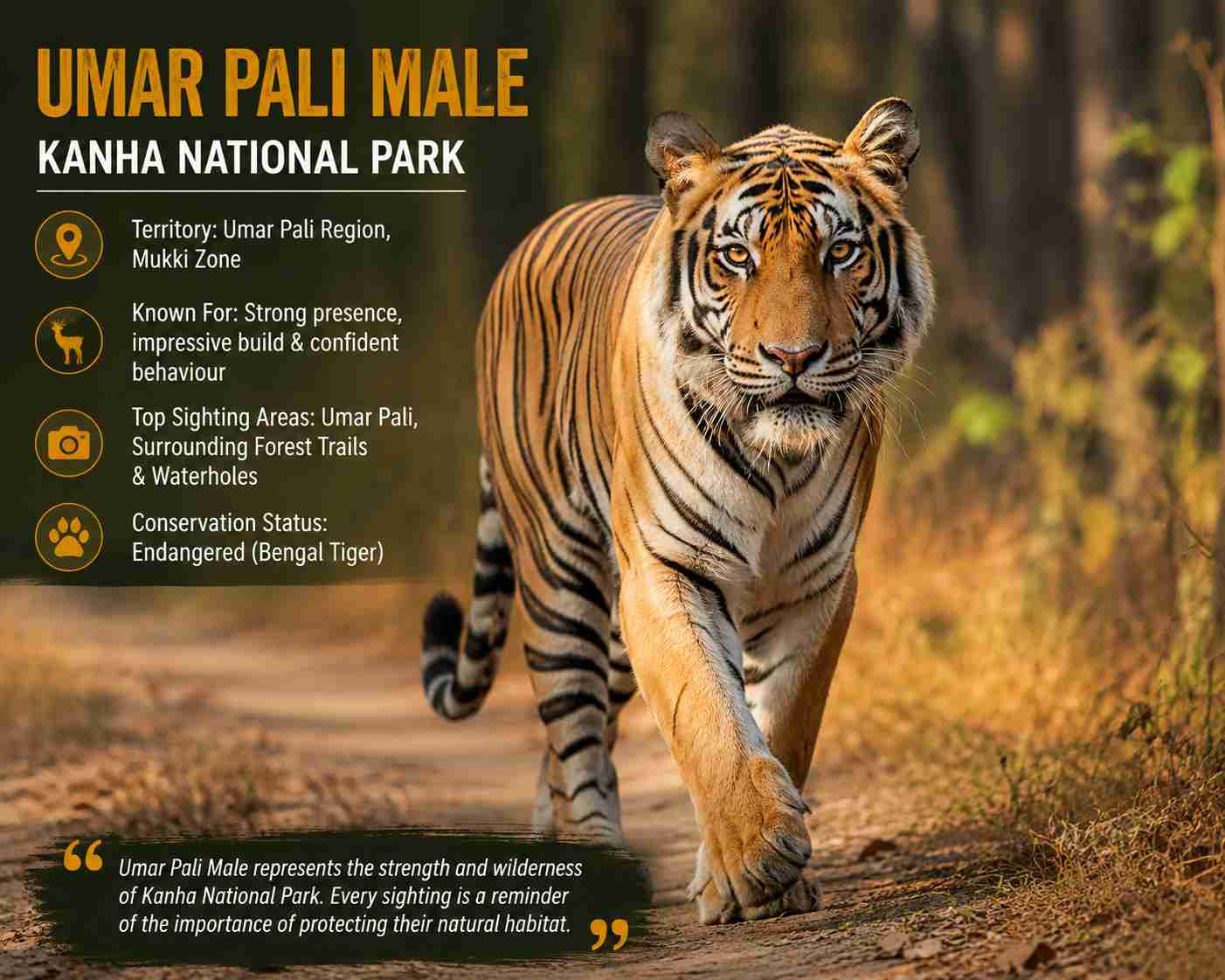
Named after the Umar Pali region where he established his territory, Umar Pali Male thrives in a landscape of dense sal forests, lush meadows, bamboo groves, and seasonal water sources. This rich habitat supports healthy populations of prey such as spotted deer, sambar, wild boar, and gaur, providing everything a dominant male tiger needs to survive and flourish. His territory forms an important part of Kanha's thriving ecosystem and contributes to maintaining the natural balance of wildlife in the reserve.
Umar Pali Male is admired for his muscular build, broad head, thick neck, and bold black stripes spread across his bright orange coat. Like every Bengal tiger, his stripe pattern is unique, allowing forest officials and wildlife researchers to identify him through camera trap images and field observations. As he matured, he developed the powerful appearance expected of an adult territorial male, making him one of the impressive tigers seen in the Mukki region.
Known for his calm yet alert nature, Umar Pali Male often patrols forest roads, marks trees with scent, and rests near water bodies during warmer hours of the day. His movements demonstrate the natural behaviour of a wild Bengal tiger, constantly monitoring his territory while remaining watchful for rivals and opportunities to hunt. Every sighting reminds visitors of the intelligence, patience, and strength that define India's national animal.
As an experienced predator, Umar Pali Male relies on stealth rather than speed while hunting. He patiently stalks prey before launching a short, powerful attack. His natural diet includes chital (spotted deer), sambar deer, wild boar, and occasionally gaur, depending on availability. The abundant prey base within Kanha Kisli National Park allows tigers like Umar Pali Male to maintain healthy territories and contribute to a stable tiger population.
Beyond his impressive appearance, Umar Pali Male plays an important ecological role in Kanha National Park. Adult male tigers help maintain balanced herbivore populations, protect breeding territories, and support the long-term health of the forest ecosystem. His continued survival reflects the success of habitat protection, anti-poaching initiatives, scientific monitoring, and responsible wildlife tourism practiced within Kanha.
For wildlife photographers and nature lovers, spotting Umar Pali Male during a safari is always a memorable experience. Whether walking confidently along a forest trail or disappearing silently into the dense jungle, he represents the untamed beauty of Kanha National Park and the ongoing success of India's tiger conservation efforts.