Tag: Kanha Jungle Safari Price, Kanha Safari Booking, Kanha National Park
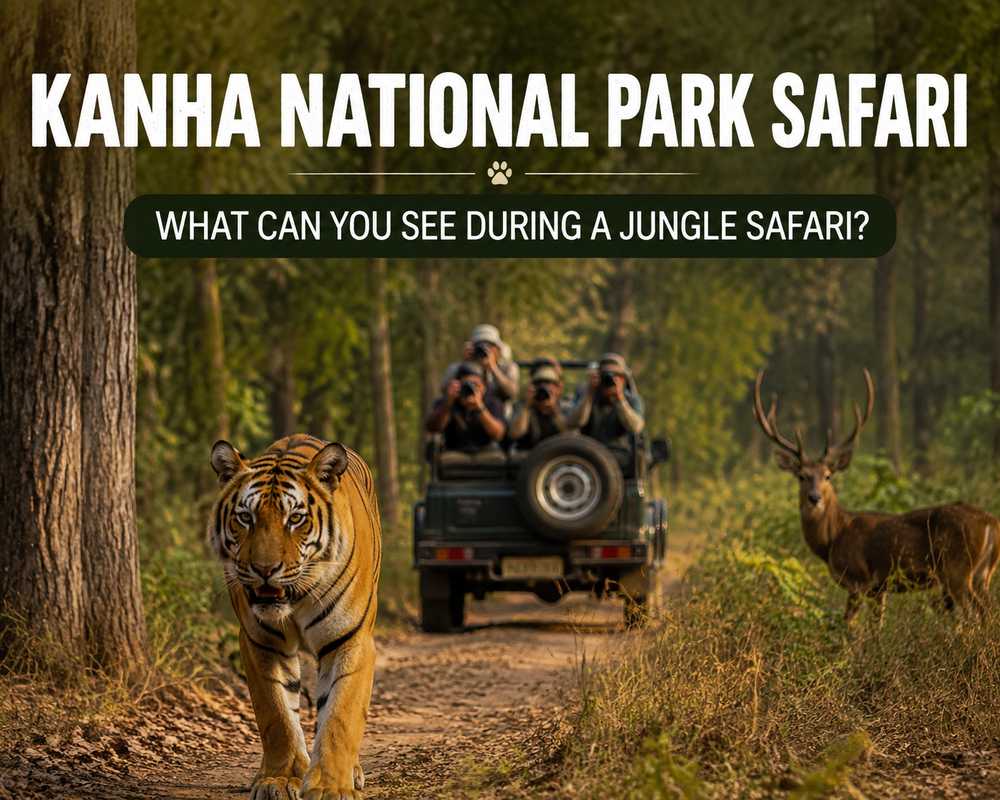
Kanha National Park Safari: What Can You See During a Jungle Safari?
Kanha National Park Safari: What Can You See During a Jungle Safari?
A jungle safari in Kanha National Park is much more than a search for a Bengal tiger. Every safari takes visitors through a changing landscape of sal forests, bamboo groves, open meadows, water bodies, and forest trails where wildlife can appear unexpectedly. While tigers remain the biggest attraction, Kanha offers opportunities to observe a remarkable variety of mammals, birds, reptiles, and other forms of forest life.
Located in Madhya Pradesh, Kanha is one of India's best-known wildlife destinations and is particularly famous for its tiger conservation efforts and the protection of the rare Hard Ground Barasingha. A safari here is therefore not simply a sightseeing trip—it is an opportunity to observe how different species share and depend on the same forest ecosystem.
What Makes a Kanha Safari Special?
The experience of a Kanha safari changes from one drive to another. Wildlife is free to move through the forest, so there is no guarantee of seeing a particular animal. Instead, every safari is about observing signs, sounds, movements, and habitats while travelling quietly through the forest.
Experienced drivers and naturalists may look for alarm calls, fresh pugmarks, tracks, grazing animals, movement around water sources, or other clues that indicate recent wildlife activity.
Early morning safaris can offer misty landscapes, bird calls, grazing herbivores, and fresh animal tracks, while later drives may provide opportunities to observe wildlife becoming active around open meadows and water sources.
Bengal Tiger: The Main Attraction of Kanha
The Royal Bengal Tiger is undoubtedly the animal most visitors hope to encounter during a Kanha jungle safari. The reserve provides suitable habitat for tigers because of its extensive forest cover, grasslands, water sources, and healthy prey base.
A tiger may be seen walking along a forest road, resting in the shade, crossing a track, moving through tall grass, or appearing briefly between trees. Sometimes the only indication of a tiger's presence is an alarm call from chital or langur.
Tiger sightings are unpredictable, and this is an important part of a genuine wildlife experience. The forest cannot be treated like a zoo where animals are displayed at fixed locations. Patience, silence, observation, and a little luck all play a role.
Photographers should also remember that maintaining a respectful distance and following safari regulations is more important than getting a close photograph.
Hard Ground Barasingha
One of Kanha's most remarkable wildlife stories is connected with the Hard Ground Barasingha. This deer is closely associated with the reserve and has become an important symbol of Kanha's conservation efforts.
During a safari, visitors may encounter Barasingha in open grasslands or other suitable habitats. Their impressive antlers, graceful appearance, and group behaviour make them particularly interesting to observe.
For wildlife enthusiasts, seeing a Barasingha in its natural environment can be as rewarding as seeing a tiger because the species represents one of Kanha's major conservation stories.
Chital or Spotted Deer
Chital are among the most commonly observed herbivores in Kanha. Their attractive spotted coats make them easy to recognise, especially when they are feeding in open meadows or forest clearings.
Chital are also an important part of the tiger's prey base. During a safari, a sudden alarm call from a group of chital can sometimes indicate the presence of a predator nearby.
Watching their behaviour can therefore add another dimension to a safari. Instead of simply looking for a tiger, visitors can learn to recognise how prey animals react to danger.
Sambar Deer
The Sambar is another important herbivore found in Kanha. Larger and generally darker than chital, these deer are often seen near forest edges, water sources, and vegetation-rich areas.
Sambar are particularly interesting because their warning calls can alert other animals—and safari visitors—to the presence of a predator.
A naturalist may pay close attention to repeated alarm calls because understanding these sounds can help interpret what is happening deeper inside the forest.
Gaur
The Indian Gaur, sometimes called the Indian bison, is one of the most impressive large mammals that visitors can encounter during a Kanha safari.
With its muscular body, dark coat, and contrasting lower legs, a full-grown gaur can be an unforgettable sight. Groups may be seen feeding in grasslands or moving through forest areas.
For photographers, gaur provide excellent opportunities to capture the scale and strength of Kanha's herbivore community.
Leopard
The leopard is one of Kanha's more elusive predators. Unlike tigers, leopards often prefer areas where vegetation and cover allow them to remain hidden.
A leopard sighting therefore requires considerable patience and good observation. Visitors may occasionally spot one resting on a branch, moving across a road, or disappearing into dense vegetation.
Even a brief leopard encounter can become one of the most memorable moments of a Kanha safari.
Dhole or Indian Wild Dog
The Dhole, commonly known as the Indian wild dog, is another fascinating predator of Kanha.
Dholes are social animals and may be encountered in groups while travelling through the forest. Watching a pack communicate and move together provides a different perspective on predator behaviour.
Unlike the solitary image often associated with big cats, wild dogs demonstrate the importance of cooperation and group behaviour in the forest ecosystem.
Sloth Bear
The Sloth Bear is one of India's distinctive forest mammals and is present in the Kanha landscape.
Sightings can be unpredictable because these animals may spend much of their time in vegetation or other areas where visibility is limited. A sloth bear walking across a safari track or foraging in an open area can therefore be an exciting surprise.
Visitors should always maintain a safe distance and follow the instructions of their safari driver and naturalist when such animals are encountered.
Langurs
Hanuman langurs are frequently seen during wildlife safaris in Kanha. Their movements through trees and alarm calls make them interesting animals to watch.
Langurs can also provide useful clues about predator activity. When a group suddenly becomes alert and begins calling repeatedly, safari guides may investigate the surrounding area for possible predator movement.
For children and first-time wildlife visitors, langurs are often among the easiest animals to observe because they may remain active around forest roads and open areas.
Wild Boar
Wild boar are another important part of Kanha's wildlife community. They can often be seen foraging for food along forest tracks, grasslands, and areas with suitable vegetation.
Although they may appear ordinary compared with a tiger or leopard, wild boar form an important part of the ecosystem and contribute to the food chain that supports larger predators.
Jackals and Other Small Carnivores
Kanha's safari experience is not limited to large mammals. Golden jackals and other smaller carnivores may occasionally be observed moving along forest roads or searching for food.
These animals are often overlooked because visitors naturally focus on larger species. However, learning to notice smaller wildlife can make a safari much more rewarding.
Birdwatching During a Kanha Safari
Kanha is also an excellent destination for birdwatchers. The forest's different habitats support a wide range of resident and seasonal bird species.
Depending on the season and location, visitors may encounter birds such as:
- Indian roller
- Crested serpent eagle
- Changeable hawk-eagle
- Peafowl
- Parakeets
- Drongos
- Kingfishers
- Egrets
- Woodpeckers
- Bee-eaters
- Various species of owls
Birdwatching requires a different pace from tiger spotting. Instead of scanning only the road ahead, visitors can look into tree canopies, listen for calls, and watch water bodies and grassland edges.
A good naturalist can help identify bird species and explain their behaviour, habitat, and role within the ecosystem.
Reptiles and Other Forest Life
The Kanha ecosystem also supports reptiles and numerous smaller creatures. Depending on the season and conditions, visitors may encounter snakes, lizards, turtles, and other reptiles.
Butterflies, insects, spiders, and other invertebrates also contribute to the health of the forest. They may not receive the same attention as tigers, but they are essential parts of the ecosystem.
For nature photographers, these smaller subjects can provide excellent opportunities for close-up photography.
What Happens During a Typical Safari?
A typical safari begins with entry into the designated tourism area according to the permitted schedule. After completing the necessary formalities, the safari vehicle proceeds into the forest.
The initial part of the drive is often spent observing the landscape and looking for tracks, birds, herbivores, and other signs of wildlife.
As the safari continues, the driver and naturalist may discuss recent animal movements or investigate alarm calls and tracks. Some stretches may be quiet, while another section can suddenly become active with wildlife.
This unpredictability is one of the reasons jungle safaris remain exciting.
You may spend several minutes watching a group of deer before noticing a predator nearby. On another safari, you might not see a tiger at all but enjoy a spectacular sighting of Barasingha, gaur, birds, or other wildlife.
Every drive tells a different story.
Best Time to Look for Wildlife
Wildlife activity can vary according to season, temperature, water availability, and animal behaviour.
During warmer months, animals may spend more time around water sources or shaded areas. Cooler mornings can offer pleasant safari conditions and active wildlife movement.
The monsoon season changes the appearance of the landscape dramatically, with vegetation becoming lush and streams receiving fresh water. Tourism operations and safari availability, however, follow the seasonal schedule and rules established by the relevant authorities.
Visitors should therefore check the latest information before planning their trip to Kanha National Park.
How to Improve Your Chances of Seeing Wildlife
Stay Alert
Wildlife may appear anywhere. Avoid spending the entire safari looking at a phone or camera screen.
Listen to the Forest
Alarm calls from deer, langurs, and other animals can provide useful clues about predator movement.
Follow Your Naturalist
Local naturalists and experienced drivers understand the landscape and animal behaviour. Their observations can help you notice details that might otherwise be missed.
Be Patient
Wildlife does not operate according to a timetable. A quiet period can suddenly turn into an exciting encounter.
Respect Silence
Loud conversations and unnecessary noise can disturb animals and reduce the quality of the safari experience.
Never Try to Attract Wildlife
Do not call animals, throw objects, offer food, or ask the driver to chase wildlife for photographs.
Responsible behaviour protects both visitors and animals.
Wildlife Photography During a Kanha Safari
Kanha offers excellent opportunities for wildlife photography, but good photographs should never come at the expense of animal welfare.
Carry appropriate camera equipment, keep your settings ready before entering areas where wildlife is likely to appear, and avoid sudden movements.
A telephoto lens is generally more useful than trying to approach animals closely. Early morning light can create beautiful conditions for landscapes and wildlife portraits, while soft evening light can produce dramatic photographs.
Most importantly, remember that a photograph is a record of the experience—not the purpose of disturbing the animal.
Kanha Safari Is More Than Tiger Spotting
A common mistake among first-time visitors is judging the success of a safari only by whether they saw a tiger.
Kanha is a complete ecosystem. A safari may introduce you to a Barasingha herd moving through a meadow, a family of langurs calling from the trees, a large gaur grazing peacefully, a colourful kingfisher near water, or a pack of wild dogs moving through the forest.
These encounters help visitors understand why conservation is about protecting habitats rather than focusing on a single species.
The tiger is an important symbol of Kanha, but the forest survives because hundreds of species interact with one another.
Planning Your Kanha National Park Safari
Before visiting Kanha, travellers should plan their safari according to the latest availability, permitted tourism zones, entry rules, and seasonal conditions.
Accommodation should ideally be selected according to the safari gate and travel itinerary. Visitors should also keep sufficient time between safari drives and other activities rather than trying to rush through the experience.
If you are travelling with children or elderly family members, choose accommodation and safari timings that suit your group's comfort.
For travellers interested in photography, it can be useful to plan multiple safaris because wildlife sightings are unpredictable and every drive provides a different opportunity.
Responsible Wildlife Tourism in Kanha
Kanha is a protected ecosystem, and every visitor has a responsibility to minimise their impact.
- Follow forest department rules.
- Stay inside the designated safari vehicle.
- Do not litter.
- Do not feed animals.
- Avoid loud music and unnecessary noise.
- Maintain a respectful distance from wildlife.
- Follow instructions from the driver and naturalist.
- Never attempt to provoke animals for photographs.
- Respect other visitors and their wildlife experience.
Responsible tourism allows future visitors to experience the same forest without placing unnecessary pressure on wildlife.
Frequently Asked Questions
Is seeing a tiger guaranteed during a Kanha safari?
No. Tigers live freely in the forest, and sightings depend on animal movement, weather, habitat conditions, and chance. Multiple safaris may improve the opportunity to encounter wildlife, but no ethical safari operator can guarantee a tiger sighting.
What is the main attraction of Kanha National Park?
The Royal Bengal Tiger is one of Kanha's major attractions. However, the reserve is also known for Hard Ground Barasingha, gaur, leopards, wild dogs, sloth bears, deer, birds, and its beautiful forest landscape.
Can children enjoy a Kanha jungle safari?
Yes. A safari can be an excellent educational experience for children when they are able to follow forest rules and remain patient and quiet.
Is Kanha good for wildlife photography?
Yes. Kanha's varied landscape and diverse wildlife make it a popular destination for wildlife photography. Visitors should always maintain a safe distance and follow safari regulations.
What should I carry on a Kanha safari?
Depending on the season, useful items can include comfortable clothing, binoculars, sunglasses, a hat, drinking water, sunscreen, and a camera with suitable lenses. Follow the latest park rules regarding permitted items.
Final Thoughts
A Kanha National Park safari is an opportunity to experience a living forest rather than simply search for a particular animal. Tigers may be the dream sighting for many visitors, but the true richness of Kanha becomes apparent when you begin noticing the entire ecosystem.
From the graceful Hard Ground Barasingha and powerful gaur to elusive leopards, social wild dogs, colourful birds, deer, langurs, and countless smaller creatures, every safari can reveal something different.
The best approach is to enter the forest with patience and curiosity. A tiger sighting can become the highlight of your journey, but even when the big cat remains hidden, the sounds, landscapes, animals, and atmosphere of Kanha can create memories that last long after the safari ends.
For more information about Kanha National Park, safari planning, accommodation, travel information, and wildlife experiences, explore our website and plan your journey responsibly.
```